


Garden design
Few of us are lucky enough to live in surroundings where every element matches our taste and vision. Achieving that takes not only the financial means but also creativity, know-how and a great deal of courage. If any of the last three is uncertain or missing, it is better to turn to a professional. When we build a house, we commission an architect; when we plan an interior, we engage an interior designer; and when we want a garden, we bring in a landscape architect.
Garden design calls for a sound knowledge of plants, garden structures and paving types, and of the basic rules of shaping space. A harmonious composition depends on understanding the size, foliage colour, habit, flowering time and growing requirements of trees, evergreens, shrubs and perennials. Choosing the right structures and paving for each purpose can spare us a great deal of frustration later on. Taking the existing conditions into account (buildings, retaining walls, the characteristics of the plot), the balance of the space has to be created through planting.
A garden works well when it meets every need of the people who live with it, including how much time they want to spend looking after it. It has to leave room not only for today’s expectations but also for future plans, since moving a mature tree or an established group of shrubs is all but impossible.
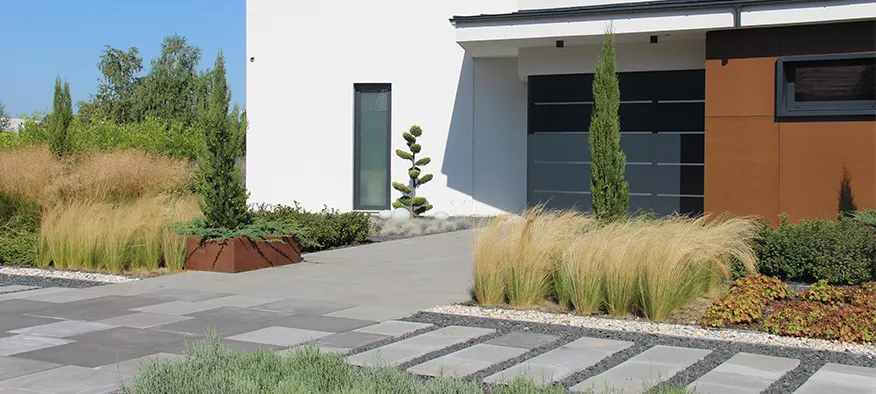
We can help bring your ideas to life with the following types of plan:
- Concept plan: defining functions and boundaries in line with the characteristics of the plot and the building
- Planting plan: specifying the types and quantities of plants for the beds and trees set out in the concept
- Landscape design plan: the content agreed over several rounds of consultation, refined into a set of drawings with sections and detail drawings, accompanied by an unpriced bill of quantities
- Visualisation: three-dimensional images of key features or details that are hard to picture
- Construction drawings: all of the above plans together, supplemented by setting-out plans and a proposed construction sequence, along with its logistics where necessary